Avoid Anemic Domain Models
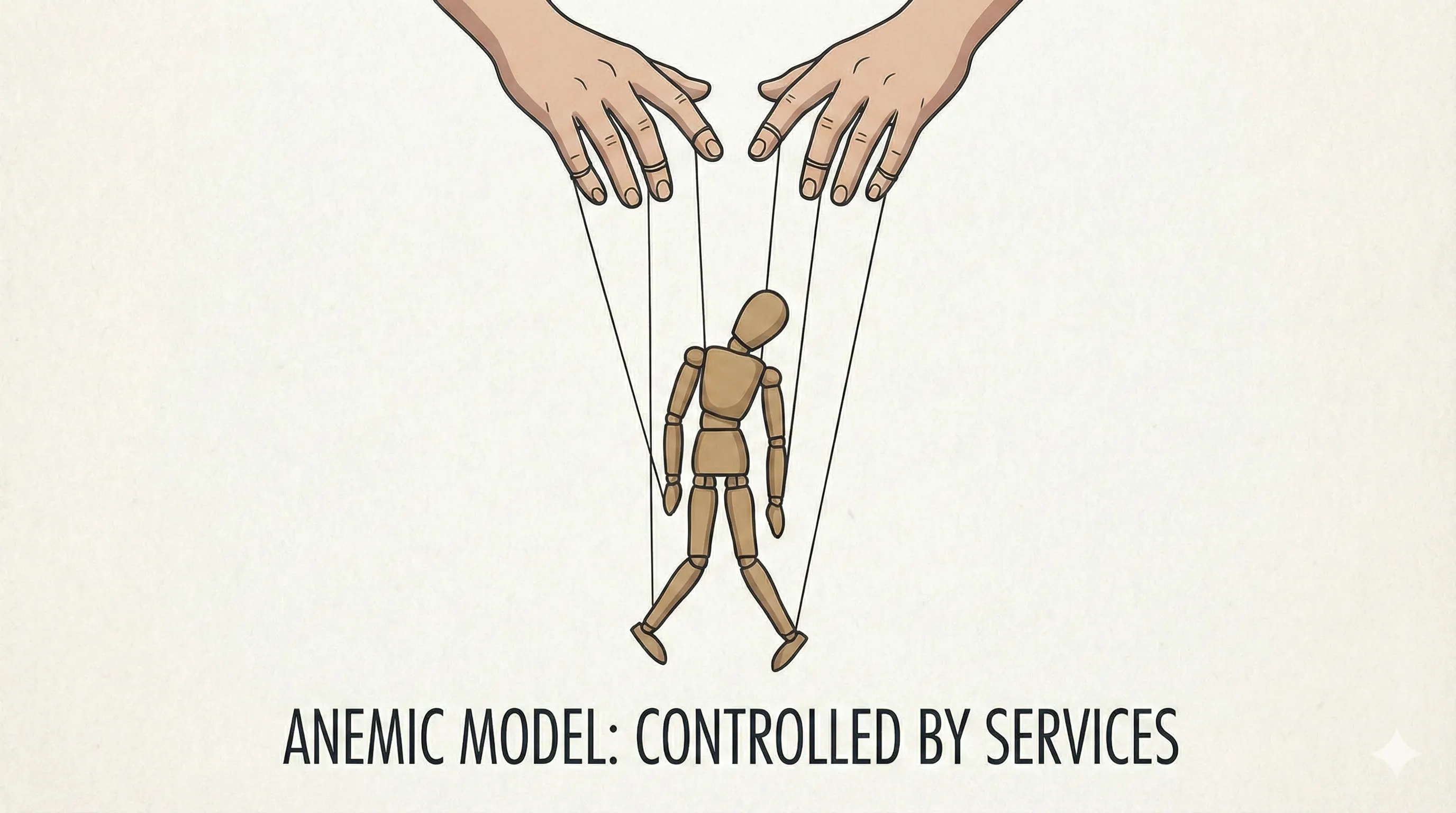
Stop writing C# classes that are just data bags. An anemic domain model scatters your business logic, leading to bugs and maintenance nightmares. Here’s how to fix it.

Stop writing C# classes that are just data bags. An anemic domain model scatters your business logic, leading to bugs and maintenance nightmares. Here’s how to fix it.

The ‘Tell, Don’t Ask’ principle helps reduce behavioral dependencies in C# applications by keeping decision-making logic inside the objects that own the data. This leads to cleaner, more maintainable code with better encapsulation and reduced coupling.
Master SOLID principles with real C# examples, interview questions, common pitfalls, and clean architecture tips for maintainable, testable code.
Learn why preferring interfaces over abstract classes in C# improves code flexibility, testability, and maintainability for robust .NET applications.
Learn how polymorphism in C# using Template Method, Strategy, and Visitor patterns makes your code flexible, maintainable, and reusable.
Discover how composition helps you follow the SOLID principles in C#. See practical examples for each principle, learn why composition is more flexible than inheritance, and get actionable tips for writing robust, testable, and maintainable code.
Discover why composition is often a better choice than inheritance in C#. This article explains the drawbacks of deep inheritance, demonstrates how to use composition for flexible and maintainable code, and provides practical tips for applying these principles in real-world projects. Includes code examples and guidance for testable, scalable software design.