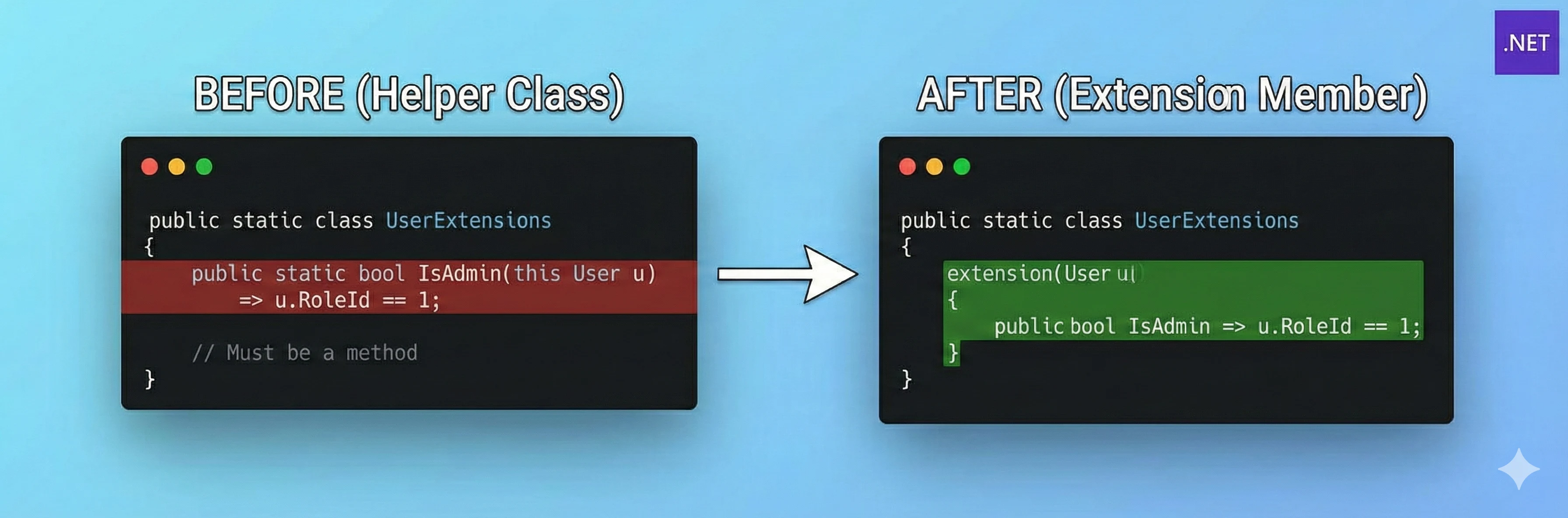
C# 14 Extension Members: Cleaner Code
The era of the ‘Helper Class’ is over. C# 14 introduces Extension Members, allowing you to add properties, operators, and static methods to external types. Here is how to modernize your codebase.
The era of the ‘Helper Class’ is over. C# 14 introduces Extension Members, allowing you to add properties, operators, and static methods to external types. Here is how to modernize your codebase.

The ‘Tell, Don’t Ask’ principle helps reduce behavioral dependencies in C# applications by keeping decision-making logic inside the objects that own the data. This leads to cleaner, more maintainable code with better encapsulation and reduced coupling.
Copy-paste coding may seem convenient, but it often causes hidden bugs. Learn practical C# patterns to replace duplication and maintain clean, maintainable code.
TL;DR: High cohesion means classes focus on one job. Low coupling means classes don’t depend too much on each other. When I refactor messy code, these two principles guide every decision I make. Why I Focus on Cohesion and Coupling When Refactoring After 10+ years of building enterprise applications, I’ve inherited my fair share of messy codebases. The pattern is always the same: tangled classes doing too much, components that break when you touch something seemingly unrelated, and tests that require half the application to run. ...
Discover when it’s justified to break SOLID principles for performance in C#. Learn how to measure, isolate, and document exceptions, see real-world trade-offs, and keep your codebase maintainable, even in the engine bay of high-throughput systems.